
Orthognathic Surgery in Bengaluru
Corrective jaw surgery to realign the jaws, balance the face, and improve bite, breathing and long-term stability, planned with virtual surgical planning by Dr Dipesh Rao.
Book a Consultation
When Is Jaw Surgery Done
The anomalies that need orthognathic surgery can arise from congenital conditions, growth abnormalities, injury or other developmental issues. Misaligned jaws can cause TMJ disorders and difficulty with chewing, speaking and breathing, so while the surgery improves both function and appearance, its primary goal is to enhance oral function. It is usually carried out after facial growth is complete, around 14 to 16 years in females and 16 to 18 years in males, and can also be performed in adulthood.
Problems That Need Jaw Surgery
Common jaw and bite anomalies that cannot be corrected by orthodontic treatment alone and need orthognathic surgery.
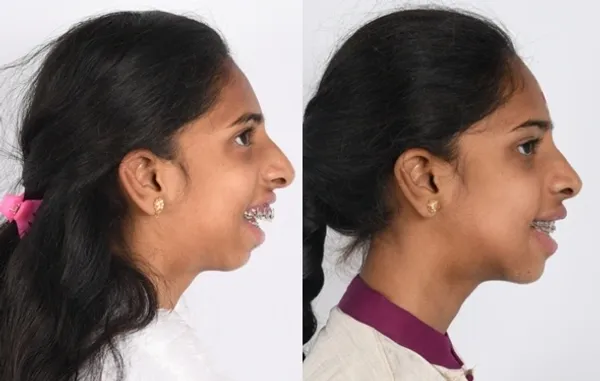
Overbite (Severe Class II Malocclusion)
An overbite occurs when the lower jaw sits significantly behind the upper jaw. It can cause difficulty chewing, speech problems, jaw pain, aesthetic concerns and a higher risk of dental issues such as tooth wear, gum problems and temporomandibular joint (TMJ) disorders. A minor overbite of about 2 to 4 mm can be treated with braces, but a major overbite can only be corrected with orthognathic surgery.
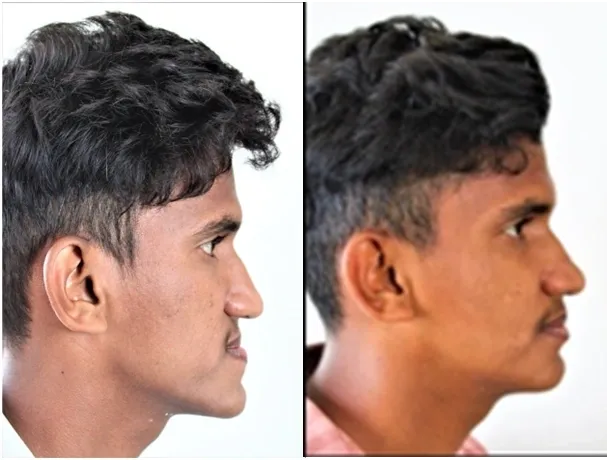
Underbite (Severe Class III Malocclusion)
An underbite occurs when the lower jaw protrudes forward. It can cause difficulty chewing, speech problems, jaw pain, aesthetic concerns and a higher risk of dental issues such as tooth wear, gum problems and TMJ disorders. A minor underbite can be treated with braces, but a major underbite can only be corrected with orthognathic surgery.
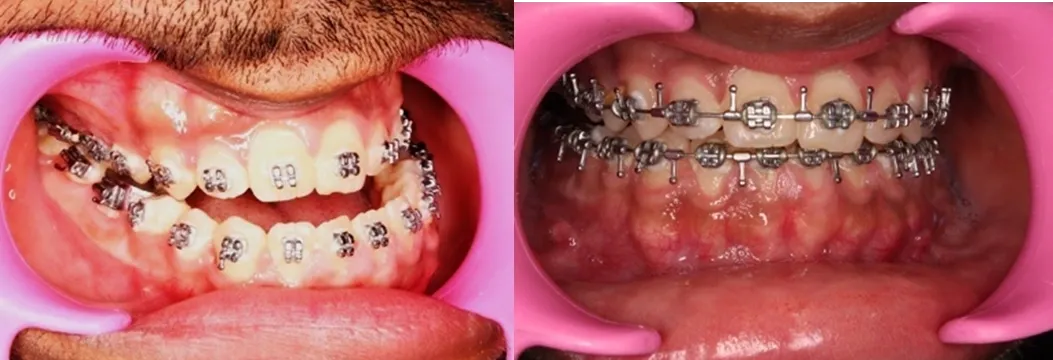
Open Bite
An open bite happens when the upper and lower teeth do not meet when the mouth is closed. It can be an anterior open bite, where the front teeth do not overlap, or a posterior open bite, where the back teeth do not overlap. Open bites can cause difficulty biting and chewing, speech difficulty, cosmetic concerns and a higher risk of tooth wear, gum problems and TMJ disorders. Minor open bites can be treated with specialised orthodontic techniques such as elastic bands, but severe open bites need orthognathic surgery.
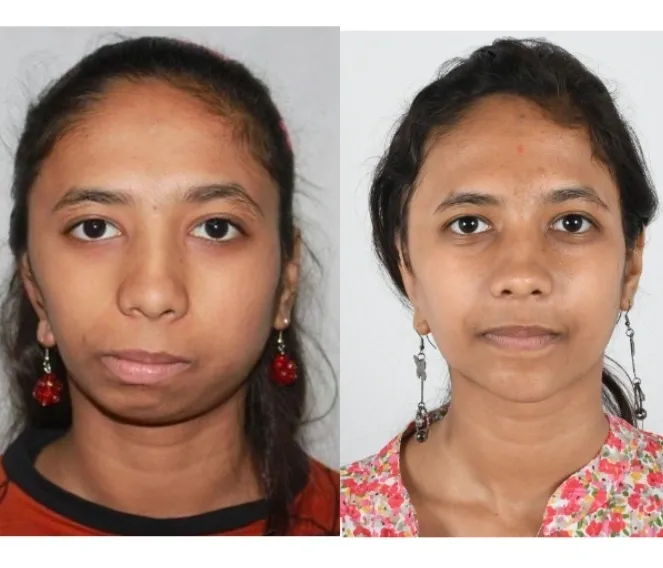
Facial Asymmetry
Facial asymmetry is a noticeable imbalance in the size or position of the facial bones. It can cause aesthetic concerns, difficulty chewing, speaking and swallowing, misaligned teeth and TMJ disorders. It occurs in developmental conditions such as condylar hyperplasia (elongation of the jaw joint), mandibular hyperplasia or hypoplasia (an increase or decrease of the lower jaw), hemifacial microsomia, facial palsy and craniofacial syndromes. Minor asymmetry can be treated with braces or aligners, but major facial asymmetry needs orthognathic or facial reconstructive surgery.
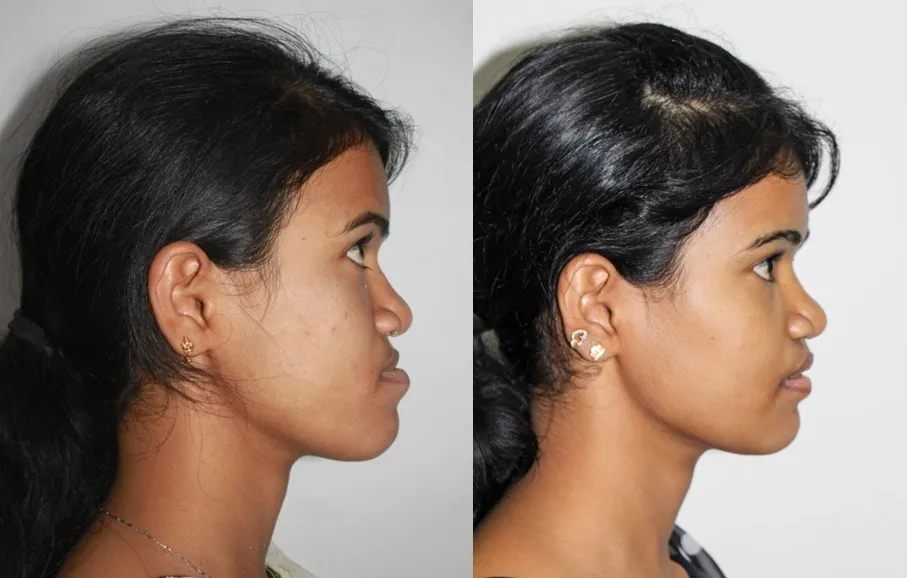
Maxillary Hypoplasia
Maxillary hypoplasia means the upper jaw is set too far back, so the upper teeth bite inside the lower teeth and the midface looks dished or hollow under the eyes. Severe cases can cause facial asymmetry, dental crowding, a misaligned bite and breathing difficulty. Jaw surgery repositions the upper jaw, and sometimes the lower jaw, to restore balance, with virtual surgical planning improving accuracy. In people with a cleft, a speech assessment is included because jaw movement can affect resonance.
Types of Orthognathic Surgery
Le Fort I Maxillary Osteotomy
The upper jaw is separated and repositioned forward, back, up or down, then fixed with small titanium plates, to correct a recessed or long midface and level the bite.
Bilateral Sagittal Split Osteotomy (BSSO)
The lower jaw is divided and moved forward or back to correct an underbite or receding chin, then fixed in its new, balanced position.
Double Jaw (Bimaxillary) Surgery
Both the upper and lower jaws are repositioned in the same operation, giving the most complete correction for complex bite and facial imbalance.
Genioplasty (Chin Correction)
The chin bone is repositioned to bring the lower face into proportion, often combined with jaw surgery for a harmonious profile.
Two Planning Approaches
The right sequence depends on your bite and goals, and is decided together with your orthodontist.
Orthodontics-first approach
Braces align the teeth over roughly 6 to 12 months, then surgery repositions the jaws, with a short phase of orthodontics afterwards to settle the bite. This is the most common route.
Surgery-first approach
In selected cases the jaw surgery is done first, followed by 6 to 12 months of orthodontic treatment. This can shorten the time in braces and show a facial change sooner.
Virtual Surgical Planning at Bhagwan Mahaveer Jain Hospital
Dr Rao plans every case in three dimensions with virtual surgical planning, technology he trained with in Melbourne, so your jaws are moved digitally before the operation to predict the bite, airway and facial outcome. Bhagwan Mahaveer Jain Hospital is equipped for safe and predictable jaw surgery with a full digital workflow.
The Procedure and Recovery
Surgery is carried out under general anaesthetic and usually takes around two to four hours depending on whether one or both jaws are treated. All cuts are made inside the mouth, so there are no external facial scars, and the bones are fixed with small titanium plates and screws. Most patients stay in hospital for a short admission.
Swelling is greatest in the first two weeks and settles steadily. Most people return to light routine within two to six weeks, following a soft diet during that time. The jawbone continues to heal over several months, and your final bite is refined with orthodontics. Regular follow-up visits track healing and stability.
Risks and How They Are Managed
Orthognathic surgery is a major but well-established procedure. Possible risks include swelling and bruising, temporary numbness of the lip or chin, bleeding, infection, and, uncommonly, a need for adjustment or revision. Careful planning, virtual simulation and experienced technique keep these risks low, and Dr Rao discusses them fully with every patient before proceeding.
Accurate Diagnosis and Planning
Although the operation itself is relatively straightforward for an experienced oral and maxillofacial surgeon, the key to a good result lies in accurate diagnosis and meticulous treatment planning. A thorough evaluation together with the orthodontist improves the predictability of the outcome. For certain conditions, such as sleep apnoea and cleft palate, a multidisciplinary approach is used, bringing in respiratory medicine and speech pathology respectively.
Jaw Surgery for Obstructive Sleep Apnoea (OSA)
Maxillomandibular advancement with genioplasty, along with a counterclockwise rotation of the jaws, is an evidence-based treatment for obstructive sleep apnoea. By moving the upper and lower jaws forward, it enlarges the airway behind the tongue and soft palate, and can significantly improve sleep and quality of life for the right patients.
Patients with disturbed sleep first need a complete assessment to diagnose sleep apnoea. Our approach is comprehensive: after a sleep study, a drug-induced sleep endoscopy (DISE) is performed to identify the exact level of obstruction. This information lets us tailor the jaw surgery to each patient's anatomy, to achieve the maximum relief. If you have been diagnosed with sleep apnoea, or suspect it, an assessment will show whether jaw surgery can help.
Why Choose Dr Dipesh Rao
Dr Dipesh Rao is an oral and maxillofacial surgeon in Bengaluru who is dual-qualified in dentistry and medicine and trained at the Royal Children's Hospital Melbourne and the Oxford Craniofacial Unit. His practice is focused on jaw deformity correction rather than general dentistry, giving genuine depth in complex asymmetry, revision orthognathic surgery, and cases with airway concerns. He works closely with orthodontists and speech therapists and consults in English, Hindi and Kannada.
Frequently Asked Questions
What is orthognathic surgery?
Orthognathic surgery, or corrective jaw surgery, repositions the upper jaw, lower jaw, or both to correct skeletal discrepancies that braces alone cannot fix. It improves bite, facial balance, airway and speech, and is performed inside the mouth so there are no visible facial scars.
Who needs orthognathic surgery?
It is considered for a severe overbite, underbite or open bite, facial asymmetry, a receding or protruding jaw, difficulty chewing or speaking, sleep apnoea linked to jaw position, or jaw deformity after a repaired cleft. It is usually done once facial growth is complete.
At what age can jaw surgery be done?
Orthognathic surgery is usually carried out after facial growth is complete, around 14 to 16 years in females and 16 to 18 years in males. It can also be performed at any point in adulthood.
What is the difference between single and double jaw surgery?
Single jaw surgery repositions only the upper or lower jaw. Double jaw, or bimaxillary, surgery repositions both jaws in the same operation and is used when the bite and facial imbalance involve both jaws, giving the most complete correction.
Are there scars after jaw surgery?
No visible facial scars. The surgery is carried out through incisions inside the mouth, so the healing scars are hidden and not seen on the face.
How long does the surgery take?
Most orthognathic operations take about two to four hours under general anaesthetic, depending on whether one jaw or both jaws are corrected and on the complexity of the case.
What is the recovery time for jaw surgery?
Swelling is greatest in the first two weeks. Most people return to light routine within two to six weeks on a soft diet, while the jawbone consolidates fully over several months with orthodontic refinement of the bite.
Do I need braces with jaw surgery?
In most cases yes. Braces align the teeth before surgery and refine the bite afterwards. In selected surgery-first cases the operation is done before the main phase of orthodontic treatment.
Can an overbite or underbite be fixed without surgery?
A minor overbite of about 2 to 4 mm or a minor underbite can often be corrected with braces alone. A major overbite, underbite or open bite involves the jaw bones and can only be corrected with orthognathic surgery.
How much does orthognathic surgery cost in Bengaluru?
The cost varies widely with the type of correction, the hospital, anaesthesia, orthodontics and length of stay, so it is best confirmed at consultation. Dr Rao's team will give you a clear, itemised estimate for your plan.
Can jaw surgery treat obstructive sleep apnoea?
Yes. Maxillomandibular advancement with genioplasty and a counterclockwise rotation moves the jaws forward and enlarges the airway, and is an evidence-based treatment for obstructive sleep apnoea. After a sleep study, a drug-induced sleep endoscopy identifies the level of obstruction so the surgery can be tailored for maximum relief.
Which surgeon should perform orthognathic surgery?
It should be performed by an experienced oral and maxillofacial or craniofacial surgeon working with an orthodontist. Dr Dipesh Rao is dual-qualified in dentistry and medicine, trained in Melbourne and Oxford, and focuses on corrective jaw surgery including complex and revision cases.
Discuss Your Jaw Surgery in Bengaluru
Book a consultation with Dr Dipesh Rao to find out whether orthognathic surgery is right for you.
WhatsApp +91 99013 02211